
Český Krumlov, Czechia: Castle, Old Town and a Weekend Getaway
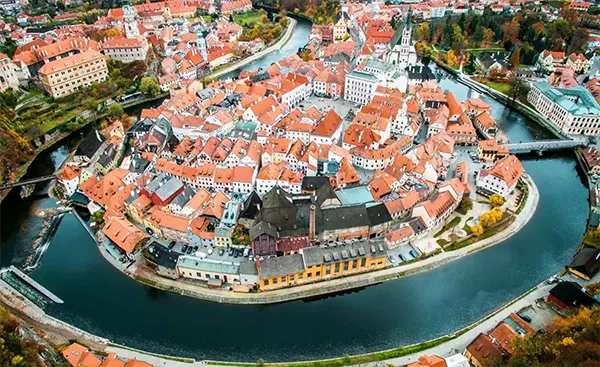
Český Krumlov is one of the most remarkable historic towns in the Czech Republic. Situated in the South Bohemian Region, approximately 170 kilometres south of Prague, it attracts visitors with its medieval streets, riverside scenery and one of the largest castle complexes in Central Europe. Recognised as a UNESCO World Heritage Site since 1992, the town combines centuries of history with a relaxed atmosphere, making it an excellent destination for a weekend break. Whether travelling from Prague or exploring wider Czechia, visitors can experience impressive architecture, cultural landmarks and authentic local traditions within a compact and walkable setting.
The History of Český Krumlov and Its Development Through the Centuries
The origins of Český Krumlov can be traced back to the 13th century when the Vítkovci noble family established a settlement near a strategic bend of the Vltava River. The location provided natural protection and access to important trade routes connecting Bohemia with Austria and Bavaria. As commerce expanded, the settlement gradually evolved into a prosperous regional centre.
During the 14th and 15th centuries, the influential Rosenberg family transformed Český Krumlov into one of the most important noble residences in Bohemia. Significant investment in architecture, infrastructure and cultural life contributed to the town’s growing reputation. Many of the Renaissance buildings visible today date from this period of prosperity.
Although political changes affected the region over the centuries, the historic core remained largely preserved. Unlike many European towns that underwent extensive modern redevelopment, Český Krumlov retained its original street layout and architectural character, helping it achieve UNESCO recognition in the late twentieth century.
Why UNESCO Recognised Český Krumlov
UNESCO designated Český Krumlov as a World Heritage Site because of its exceptionally preserved medieval urban structure. The town offers a rare opportunity to see how a Central European settlement developed over several centuries while maintaining its historic integrity.
The relationship between the castle complex, the old town and the Vltava River creates a unique cultural landscape. The winding river surrounds much of the historic centre, shaping both the town’s appearance and its historical development.
Today, conservation efforts focus on maintaining historic buildings, supporting cultural institutions and ensuring that future generations can continue to appreciate this important part of Czech heritage. Visitors benefit from these preservation programmes through access to well-maintained monuments and public spaces.
Český Krumlov Castle and the Historic Old Town
The dominant feature of the town is Český Krumlov Castle, whose construction began during the 13th century. Covering a large area above the river, the complex includes courtyards, residential buildings, administrative structures and extensive gardens. It is considered the second-largest castle complex in the Czech Republic after Prague Castle.
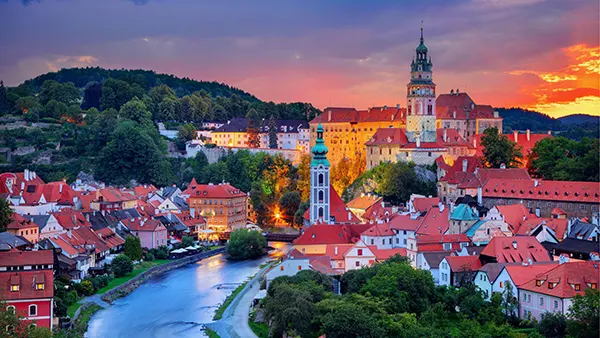
One of the most recognisable landmarks is the Castle Tower. Decorated with colourful Renaissance artwork, it offers panoramic views over the old town, the Vltava River and the surrounding countryside. The observation gallery remains one of the most visited locations within the complex.
The castle is also home to the Baroque Theatre, one of the best-preserved historic theatres in Europe. Original stage machinery, scenery and technical equipment survive, providing valuable insight into eighteenth-century theatrical performances and court entertainment.
Walking Through the Streets of the Old Town
The historic centre of Český Krumlov is compact enough to explore on foot. Narrow cobbled streets connect squares, churches, artisan workshops and centuries-old houses, creating an atmosphere that differs significantly from larger urban destinations.
Svornosti Square serves as the heart of the old town. Surrounded by colourful facades and historic buildings, it hosts seasonal markets, cultural events and local gatherings throughout the year. The square remains an important meeting place for residents and visitors alike.
Several viewpoints located around the river provide excellent perspectives of the town’s distinctive layout. Photographers often visit these locations early in the morning or during sunset when the light highlights the red rooftops and historic architecture.
Planning a Weekend Trip to Český Krumlov in 2026
Travelling to Český Krumlov from Prague is straightforward. Direct coach services typically take between two and a half and three hours, while rail connections are available through České Budějovice. Road infrastructure improvements have also made travel by car increasingly convenient.
Accommodation options include boutique hotels, family-run guesthouses and modern properties located near the historic centre. Visitors planning a summer trip or attending major cultural events are advised to reserve accommodation well in advance due to high demand.
The local dining scene reflects South Bohemian culinary traditions. Restaurants commonly serve roasted meats, freshwater fish, dumplings and regional desserts. Czech beer produced by local and national breweries is widely available throughout the town.
Top Activities for a Short Stay
A weekend itinerary can comfortably include the castle complex, the historic centre, local museums and riverside walks. Most major attractions are located within walking distance, allowing visitors to experience the town without relying on transport.
Outdoor enthusiasts often choose canoeing or rafting on the Vltava River, particularly between late spring and early autumn. These activities provide a different perspective of the town while showcasing the surrounding natural scenery.
For travellers seeking a destination that combines architecture, history, culture and relaxation, Český Krumlov remains one of the finest weekend getaway options in Czechia in 2026. Its preserved heritage, manageable size and welcoming atmosphere continue to attract visitors from across Europe and beyond.
Popular articles
-
 The history of the Kurhaus in Baden-Baden – the jewel of casinos...
A few centuries ago, gambling was closely associated with aristocratic …
-
 Île Seguin in Paris in 2026: How a Former Renault Factory Became a New...
Île Seguin is one of the most striking examples of …
-
 Casino Admiral Škofije After Its 2026 Renovation: What to See on the S...
Casino & Hotel Admiral Škofije reopened on 3 April 2026 …