
Valley of the Kings (Luxor): Which Tombs to Choose and How Tickets Work in 2026
The Valley of the Kings is not a place you “wing” successfully. On a first visit, most time is lost to small misunderstandings: how many tombs your standard ticket actually covers, which entrances require a separate purchase, and how quickly crowds compress the interior corridors. In 2026, the basics are straightforward, but the details matter. This article focuses on practical decisions you can make before you arrive, so you spend your time looking, not queuing.
Ticket basics in 2026: what the standard entry covers and what costs extra
In 2026, the standard visitor model at the Valley of the Kings is built around limited entries rather than unlimited access. Your main entry ticket is typically treated as a bundle that allows you to visit a set number of open tombs from the general list that day. This is why “seeing everything” is not realistic in one visit, and why you should decide your priorities early.
Some of the most requested tombs are commonly priced as separate add-ons. The names that most often sit outside the standard bundle are Tutankhamun (KV62), Ramesses V & VI (KV9), and Sety I (KV17). When prices are listed, they are usually shown in Egyptian pounds (EGP), and foreign visitor rates are typically higher than Egyptian resident rates.
Because ticket policies and pricing can change, treat any number you see online as a reference point, not a promise. The best habit in 2026 is to confirm the current list and add-on options on the day, either via official e-ticketing pages (when available) or at the ticket office signage. That small check prevents the most common disappointment: arriving convinced a specific tomb is included, only to find it requires an extra ticket.
Buying strategy: when to commit to add-ons and how to avoid wasted time
If you already know you want an add-on tomb, it helps to commit before you enter the valley rather than debating it in the heat. The reason is simple: the valley layout encourages back-and-forth walking, and the moment you change your mind mid-visit, you end up crossing open ground again, often while crowds are peaking.
For many visitors, the most “rational” add-on choice is KV9 (Ramesses V & VI), because the decorative programme is extensive and visually rewarding. KV62 (Tutankhamun) is historically iconic, but it is small, and the value is emotional and historical rather than purely visual. KV17 (Sety I) is often treated as premium access; if you choose it, build the day around it and allow time to look properly.
Finally, plan your pacing around the ticket rule rather than fighting it. If your standard entry covers a set number of tombs, choose them intentionally: one tomb that tends to be popular, one that offers a different layout or atmosphere, and one that is usually calmer. That mix gives you contrast and reduces the feeling that your visit was just a queue in a narrow corridor.
Choosing your three tombs: a realistic “first visit” set that works
The most useful approach is not “the three most famous tombs,” but “the three tombs that give you range.” In practical terms, range means layout, preservation, and viewing comfort. Some tombs impress because they are long and narrative-driven, others because their ceilings and colours remain crisp, and others because they are simply less congested, allowing you to stop and actually look.
On the day, use the open list as your menu. Look for one tomb where the corridor sequence is easy to follow, one where ceiling scenes and colour are strong, and one that is a bit further or steeper, because those often have fewer people inside. When you diversify like this, you avoid the “three similar experiences” problem that makes the valley blur together.
Also factor in energy and mobility. Repeated descents and climbs add up, especially in warm months when the sun in the valley is direct. If you are travelling with anyone who struggles with ramps or stairs, keep at least one of your three choices relatively easy, so the group’s pace stays comfortable and you are not forced into a rushed, stressful finish.
What to notice inside: small details that make the visit feel meaningful
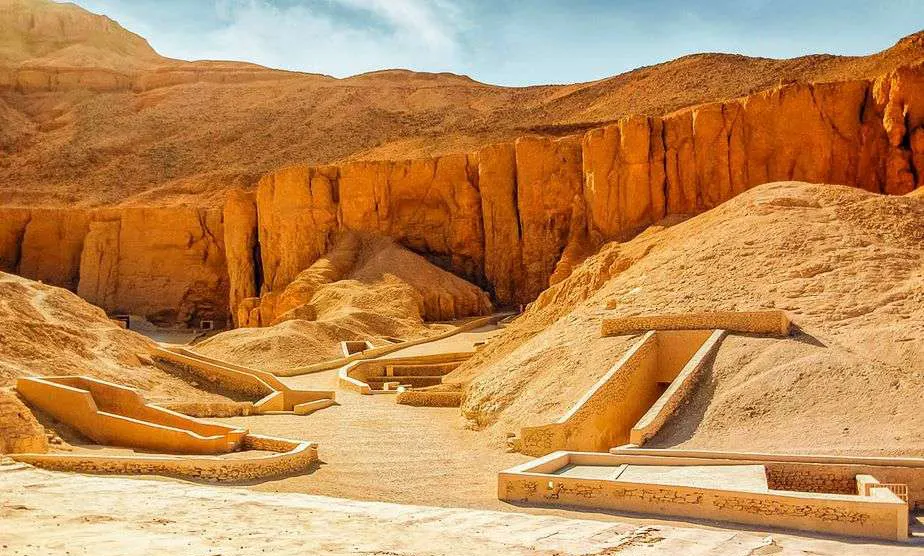
Many visitors treat tombs like a sprint to the burial chamber, then a quick exit. A better method is to slow down in the first corridor and look for patterns: how figures repeat, how texts are organised, and how colour is used to separate scenes. Even without deep background knowledge, you can see that the walls are not random decoration; they are structured programmes with consistent logic.
Pay attention to ceilings, not just walls. In several tombs, ceilings carry astronomical or symbolic themes that remain visually strong even when walls are worn. They also tend to be less blocked by crowds because people naturally face forward, so a ceiling glance can be your quiet moment even in a busy space.
Finally, notice the feeling of space. Some tombs are tight, and crowding changes the experience completely; others give you breathing room and allow you to step aside. If you have a choice between two similar tombs, pick the one that is likely to be less compressed that day. In the Valley of the Kings, comfort is not a luxury; it directly affects how much you absorb.
Timing, crowds, and heat: how to plan the day so you can actually look
In 2026, crowd behaviour at the Valley of the Kings is still highly predictable. Early morning is usually the calmest window, and mid-morning is often when group tours intensify. If you can arrive close to opening, you will likely get at least one tomb with relatively clear sightlines before the corridors become slow-moving lines.
Heat is a real factor even when the air temperature feels manageable. Descending into tombs, then climbing back out repeatedly, builds fatigue fast. Bring water, choose footwear with grip, and treat shade as a resource. The valley is open, so a few minutes of rest in a shaded spot can make the difference between a thoughtful visit and a rushed checklist.
Also be realistic about your “after” plan. Three tombs plus one add-on can be visually intense. If you are stacking multiple West Bank sites in one morning, the quality of your attention drops. A better plan is to do the Valley of the Kings properly, then keep the rest of the day lighter, so you don’t end up tired and half-seeing everything.
On-the-ground tactics: quick decisions that improve the whole experience
First, decide your route before you start scanning entrances. If you know which tomb you want first, you avoid the common trap of wandering, checking queues, and losing your best early-hour time. Make one confident choice, go in, and adjust later if needed.
Second, treat any premium add-on as the centrepiece rather than “something extra.” If you buy an add-on, give it time and attention, then choose the remaining standard entries as complements. That balance creates a coherent visit: one standout experience supported by two or three contrasting tombs.
Third, accept that openings and access can change. In 2026, conservation work and rotation schedules still affect what is available, and this is normal. If a tomb you wanted is closed, switch to a similar type rather than chasing the name. The valley rewards flexibility more than stubborn lists, and the best visits are usually the ones that adapt quickly.
Popular articles
-
 Salzburg (Austria): Old Town, Fortress and Scenic Panoramas — A Weeken...
Salzburg is one of the most compact historic cities in …
-
 Meteora, Greece: Monasteries, Dress Code and a One-Day Route
Meteora is one of the most extraordinary cultural landscapes in …
-
Valley of the Kings (Luxor): Which Tombs to Choose and How Tickets Wor...
The Valley of the Kings is not a place you …